
August 27, 2026
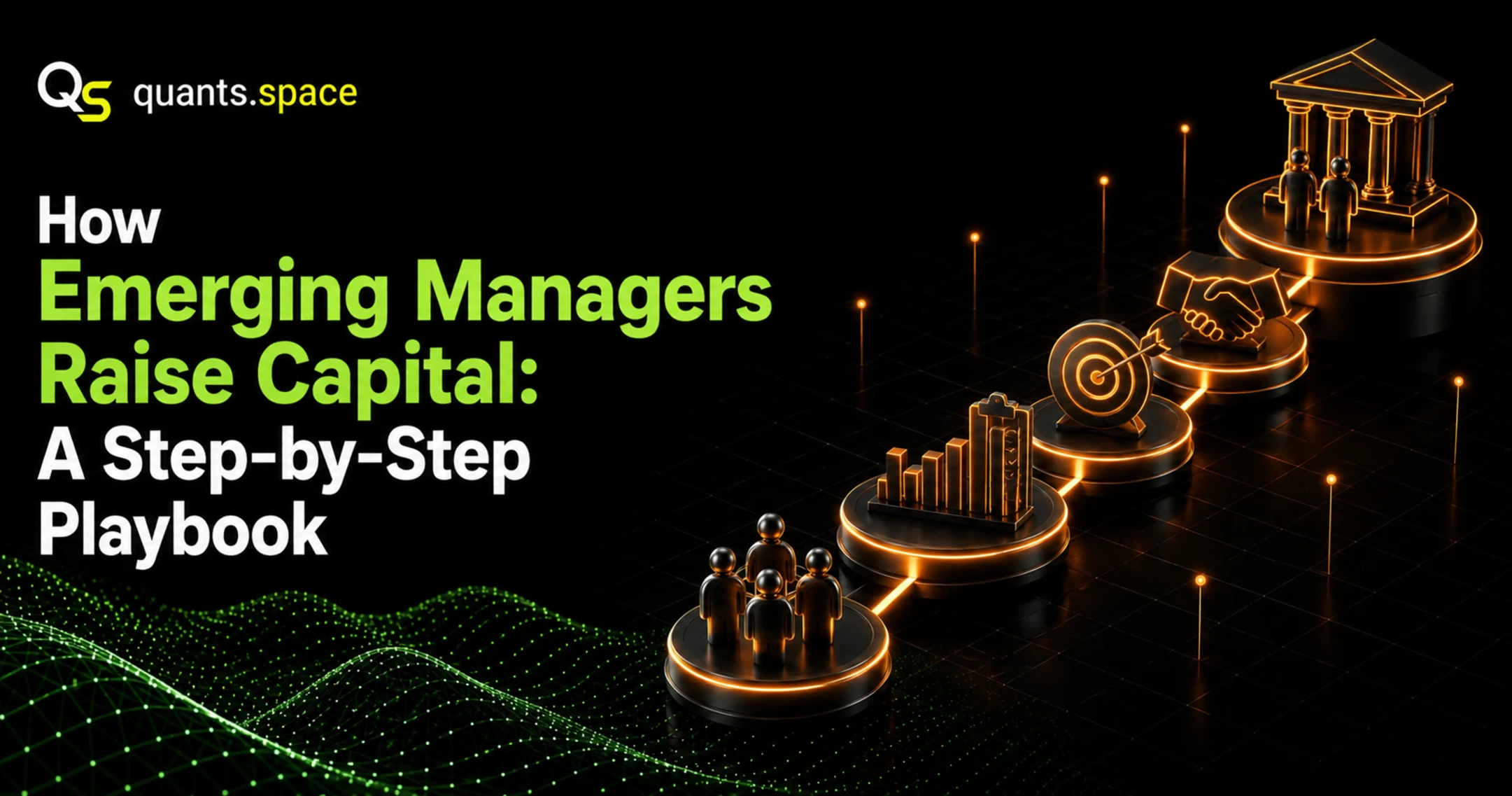
How Emerging Managers Raise Capital: A Step-by-Step Playbook
Raising capital is one of the hardest parts of building an emerging investment manager.
A strong strategy and a credible track record can open doors, but institutional fundraising takes time. Allocators need enough evidence to understand the strategy, assess the team, evaluate operational risk, and decide whether the manager fits their portfolio.
For emerging managers, this means fundraising should begin well before capital is urgently needed. Building allocator relationships, preparing institutional materials, and establishing a verifiable track record can take months.
Here is how emerging managers can approach the process.
1. Build an Institutional-Ready Track Record
Performance is usually the starting point of the conversation.
Emerging managers need a track record that gives allocators enough information to evaluate returns in context. That includes the length of the record, drawdowns, volatility, risk-adjusted performance, and behavior across different market conditions.
The distinction between backtested and live performance also matters. Backtests can demonstrate how a strategy might have behaved historically, but institutional investors will typically place greater weight on live results generated under real market conditions.
Independent verification can strengthen the case further. It gives allocators additional confidence that reported results correspond to actual trading activity.
Starting this process early is important. An emerging manager who begins looking for institutional capital only after deciding to raise may discover that allocators want to observe the strategy for another six or twelve months before committing.
2. Define the Strategy Clearly
Managers spend years developing strategies, but explaining them to an allocator requires a different skill.
The objective is to provide enough information for investors to understand the source of returns and the major risks without disclosing proprietary intellectual property.
A clear strategy presentation should establish:
- Investment Universe — The markets and instruments being traded
- Source of Alpha — The economic or behavioral rationale behind expected returns
- Risk Profile — Expected volatility, drawdowns, leverage, and major risk factors
- Liquidity — How quickly positions can be entered or exited
- Capacity — How much capital the strategy can realistically manage
- Track Record — Live, simulated, and independently verified performance where available
For quantitative managers, this balance can be particularly difficult. Allocators want transparency, while managers need to protect the models and signals that create their edge.
3. Identify the Right Allocators
More investor conversations do not necessarily produce better fundraising results.
A small systematic strategy with limited capacity may be irrelevant to a large pension fund but highly attractive to a family office, fund of funds, proprietary trading firm, or specialist allocator.
The same applies to risk tolerance, liquidity requirements, geography, asset class, and minimum investment size.
This is why allocator targeting matters. Emerging managers can spend significant time attending conferences, sending cold emails, and approaching investors whose mandates were never compatible with the strategy.
A more focused capital raising process starts by identifying allocators whose investment criteria match the manager's actual profile.
4. Build Relationships Before the Raise
Institutional capital rarely arrives after a single meeting.
Allocators may follow a manager for months before making an investment. During that period, they can observe performance, evaluate how the team communicates, and see how the strategy behaves as market conditions change.
That makes relationship building part of the fundraising process rather than something that begins when a manager needs capital.
Regular performance updates, transparent communication, and consistent reporting help investors develop familiarity with the manager over time.
For an emerging manager, an allocator who says "not yet" may still become an investor later if the strategy continues to develop as expected.
5. Prepare for Due Diligence
Serious allocator interest eventually moves into due diligence.
At this stage, performance is only one part of the evaluation. Investors may examine the investment process, operational infrastructure, service providers, risk management, compliance, cybersecurity, business continuity, and key-person risk.
Managers should have these materials ready before entering advanced fundraising discussions.
A compelling strategy can lose momentum quickly if basic operational questions cannot be answered or documentation takes weeks to assemble.
Institutional readiness therefore becomes part of capital raising itself.
Creating a More Efficient Capital Raising Process
Emerging manager fundraising has traditionally depended heavily on personal networks, conferences, introductions, and outbound prospecting. These channels can work, but they can also make manager discovery fragmented and slow.
Digital allocator networks and capital introduction platforms offer another route. They can help managers become visible to investors already searching for strategies with specific characteristics.
For managers, the advantage is relevance. Instead of approaching a broad universe of investors, they can focus on allocators whose mandates are closer to the strategy they actually run.
Quants.Space connects quantitative managers with institutional allocators looking for systematic strategies. Managers can present their strategy, build a verified performance profile, and become discoverable to investors through a dedicated quant sourcing network.
For emerging managers, raising capital still takes time. Starting early, building a credible track record, targeting the right investors, and preparing for institutional due diligence can make that process considerably more focused.